Tracing Regulatory Influences on Live Gaming Features and Mobile Payment Security in Licensed Environments
Skriven av Jonas Schmitz · 2026-08-18
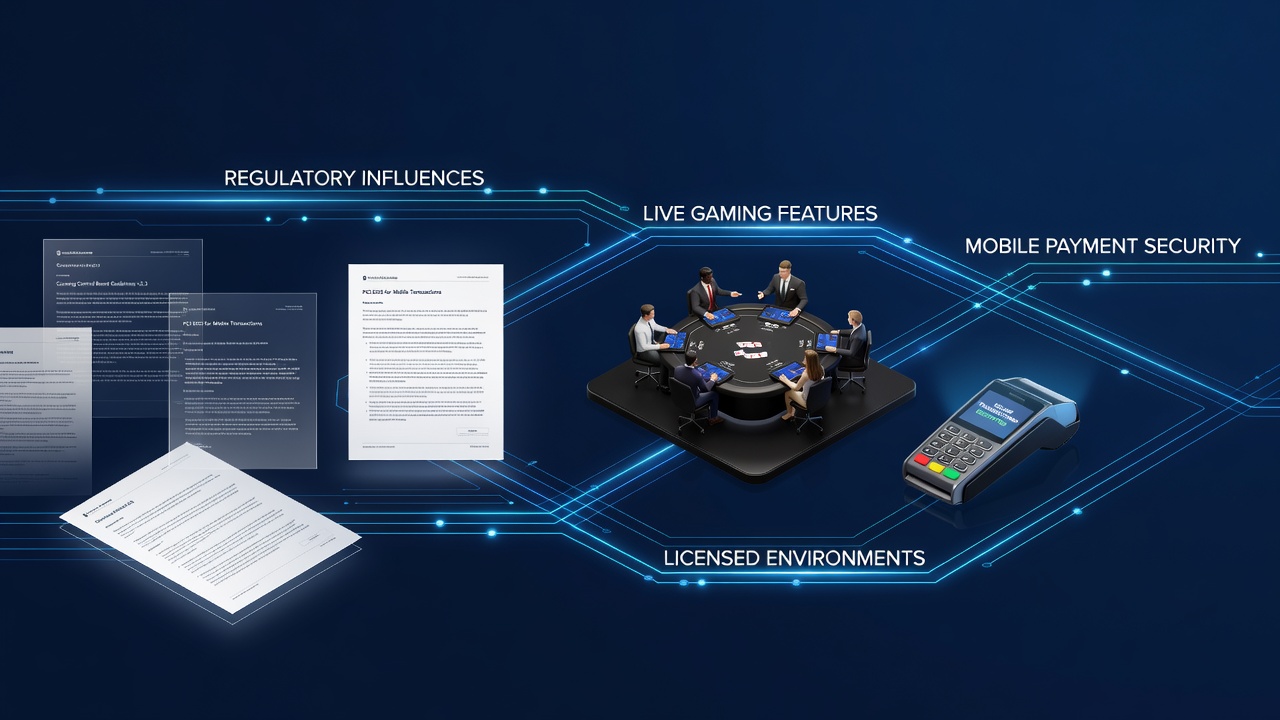
Tracing Regulatory Influences on Live Gaming Features and Mobile Payment Security in Licensed Environments
Regulatory bodies across multiple jurisdictions have shaped live gaming features through targeted rules on real-time interaction standards, fairness verification protocols, and operational transparency requirements that operators must follow in licensed settings. Data from industry reports show these measures influence everything from camera angle specifications in live dealer studios to mandatory audit trails for game outcomes, while mobile payment security receives parallel attention through encryption mandates and transaction monitoring systems. ## Evolving Standards for Live Gaming Operations
Live gaming features in licensed environments now incorporate regulatory-driven elements such as continuous identity verification during sessions and automated alerts for anomalous betting patterns, elements that emerged after reviews by authorities in North America and Europe. Observers note that these requirements often stem from broader consumer protection frameworks, where agencies require platforms to log every player action in real time, creating datasets that regulators can access during compliance checks. Research indicates that by mid-2025 several operators had adjusted their live dealer interfaces to include on-screen disclaimers about game rules, a direct response to updated guidelines from bodies like the New Jersey Division of Gaming Enforcement. Those who track policy shifts point out that August 2026 marks the scheduled rollout of enhanced technical specifications in certain Canadian provinces, where live streaming feeds must meet new resolution and latency thresholds to maintain licensing. Such changes affect how studios design their setups, pushing providers toward integrated systems that combine video feeds with backend randomization checks certified by independent labs. Figures from trade associations reveal that compliance costs for these adaptations rose notably between 2023 and 2025, yet adoption rates among major platforms remained high because licensing renewal depends on meeting the benchmarks. ## Mobile Payment Security Protocols Under Scrutiny
Mobile payment security in licensed gaming draws from overlapping financial regulations and sector-specific rules that emphasize tokenization, multi-factor authentication, and regular penetration testing. Studies conducted by academic researchers at institutions focused on digital finance show that licensed operators increasingly rely on payment gateways certified under international standards like PCI DSS, with additional layers required by gaming regulators to prevent unauthorized access during deposits and withdrawals. What's interesting is how these rules intersect with live gaming, where in-play betting often triggers rapid transaction sequences that demand seamless yet secure processing. Authorities in Australia, through the Australian Communications and Media Authority, have issued directives requiring operators to implement real-time fraud detection tied directly to player accounts, a measure that extends to mobile apps used for both gaming and payments. Data shows that after similar rules took effect in earlier years, reported incidents of payment-related disputes declined in monitored markets, prompting other regions to consider comparable frameworks. Operators must now maintain detailed records of every mobile transaction, including device identifiers and geolocation data, which feeds into broader risk assessment models used during license reviews. ## Interconnections Between Features and Security Requirements
Regulatory influences create clear linkages between live gaming mechanics and mobile payment safeguards, particularly where in-game purchases or instant top-ups occur during active sessions. Experts at industry organizations such as the European Gaming and Betting Association have documented cases where updated security protocols forced modifications to live chat functions, requiring operators to encrypt all communications that might reference payment details. This integration ensures that features like bonus triggers or live table side bets cannot bypass the same verification steps applied to direct deposits. One study revealed that platforms adapting their systems ahead of anticipated 2026 deadlines experienced fewer interruptions during audits, because their combined gaming and payment logs aligned with regulatory expectations for traceability. Those who've examined enforcement patterns observe that violations in one area, such as inadequate live game auditing, frequently lead to heightened scrutiny of payment infrastructure as well. Consequently, many licensed entities now employ unified compliance teams that monitor both domains simultaneously, using shared dashboards that flag potential issues across video streams and transaction flows. 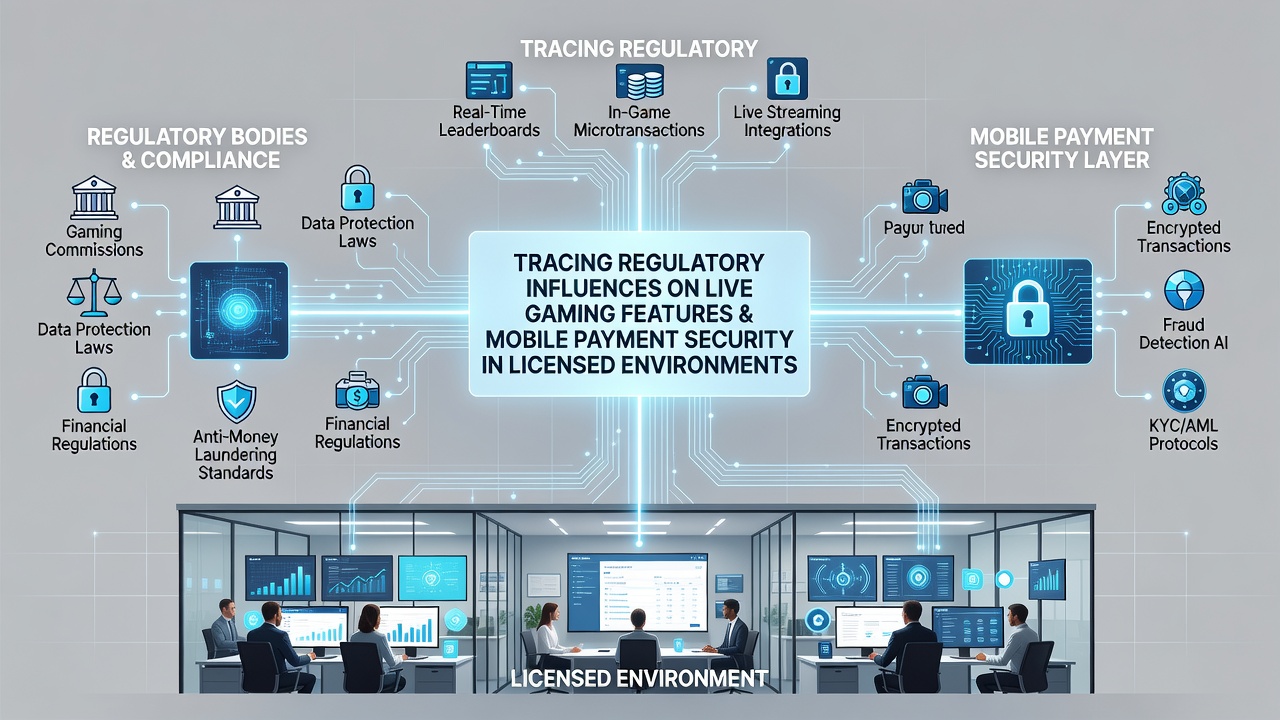 ## Regional Variations in Implementation
Different jurisdictions apply these regulatory principles with distinct emphases, creating a patchwork that global operators must navigate. In the United States, state-level agencies prioritize audit frequency for live dealer games while layering federal financial rules onto mobile payment handling, resulting in hybrid oversight models. Meanwhile, Asian markets with established licensing regimes have focused more on data localization requirements for payment records, compelling platforms to store transaction details within national borders even when live streams originate elsewhere. Research from university-led projects tracking these variations indicates that operators maintaining separate compliance documentation for each region reduce their exposure to enforcement actions. August 2026 appears on several regulatory calendars as a point when cross-border data sharing agreements may expand, potentially standardizing certain security reporting formats used in both live gaming and mobile payments. Such developments could streamline operations for multi-jurisdictional license holders while raising the baseline for technical safeguards across the sector. ## Conclusion
The cumulative effect of these regulatory measures continues to redefine operational boundaries for live gaming features and mobile payment security within licensed environments, with agencies worldwide issuing updates that operators incorporate through technical and procedural adjustments. Evidence from compliance reports and industry analyses demonstrates consistent patterns of adaptation, where new standards prompt corresponding investments in monitoring tools and verification processes. As timelines like August 2026 approach, further refinements remain likely as regulators respond to technological advances and emerging risk profiles in both live interaction and digital transaction domains.
## Regional Variations in Implementation
Different jurisdictions apply these regulatory principles with distinct emphases, creating a patchwork that global operators must navigate. In the United States, state-level agencies prioritize audit frequency for live dealer games while layering federal financial rules onto mobile payment handling, resulting in hybrid oversight models. Meanwhile, Asian markets with established licensing regimes have focused more on data localization requirements for payment records, compelling platforms to store transaction details within national borders even when live streams originate elsewhere. Research from university-led projects tracking these variations indicates that operators maintaining separate compliance documentation for each region reduce their exposure to enforcement actions. August 2026 appears on several regulatory calendars as a point when cross-border data sharing agreements may expand, potentially standardizing certain security reporting formats used in both live gaming and mobile payments. Such developments could streamline operations for multi-jurisdictional license holders while raising the baseline for technical safeguards across the sector. ## Conclusion
The cumulative effect of these regulatory measures continues to redefine operational boundaries for live gaming features and mobile payment security within licensed environments, with agencies worldwide issuing updates that operators incorporate through technical and procedural adjustments. Evidence from compliance reports and industry analyses demonstrates consistent patterns of adaptation, where new standards prompt corresponding investments in monitoring tools and verification processes. As timelines like August 2026 approach, further refinements remain likely as regulators respond to technological advances and emerging risk profiles in both live interaction and digital transaction domains.